How to Adjust a Client's Training Plan Based on Sleep and Recovery Data
Learn how to adjust a client's training plan based on sleep and recovery data: which signals matter, simple dial-back rules, and how to automate them safely.
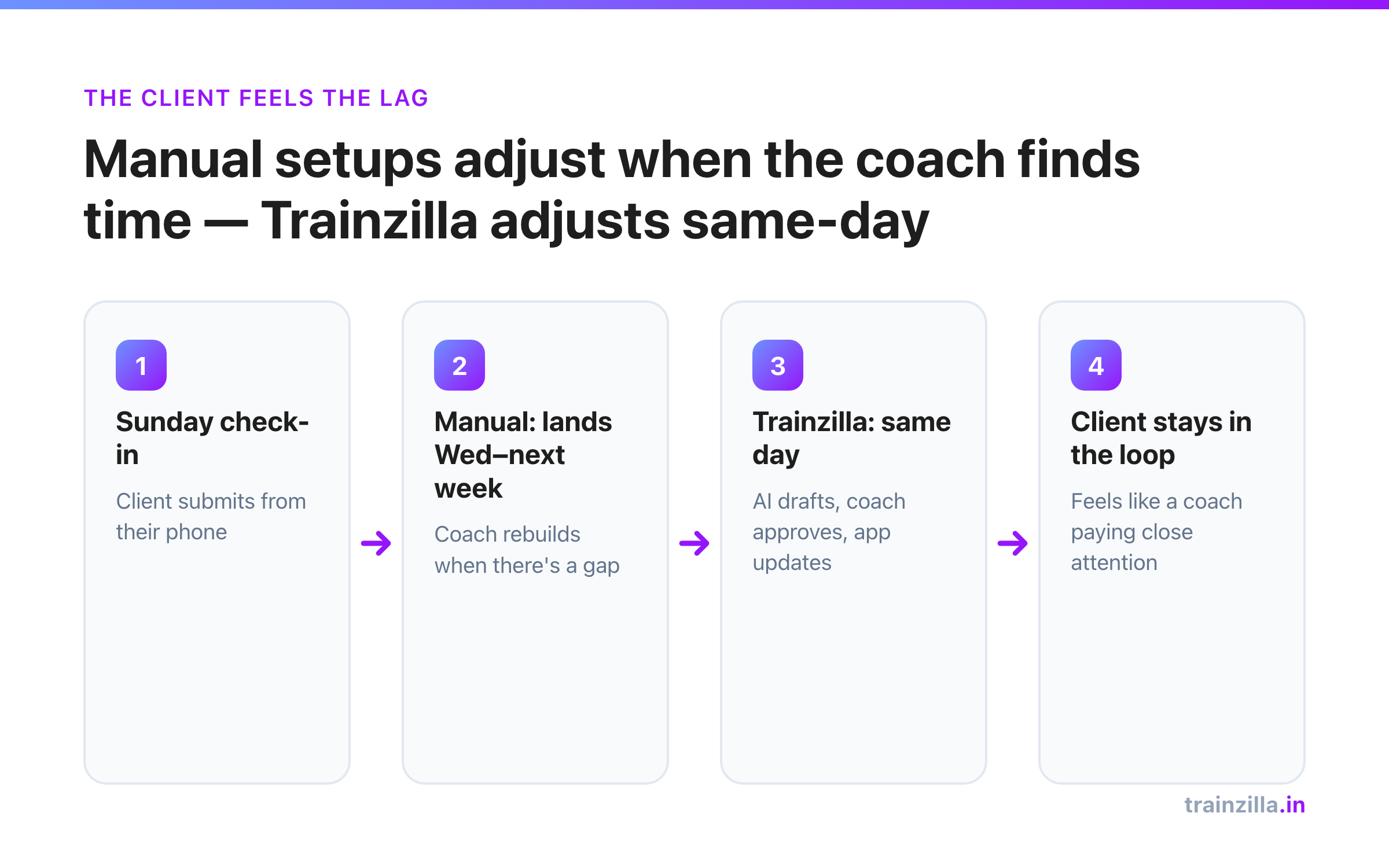
To adjust a client's training plan based on sleep and recovery data, watch three signals across a rolling week rather than a single day: sleep, resting heart rate and how the client says they feel. When two or more slide together, dial back volume first and intensity second, tell the client why, and set a date to re-check. Trainzilla automates the tedious part: the AI Coach reads recovery signals and drafts the change, and the coach approves it before the client sees anything.
What is recovery-aware programming?
Recovery-aware programming means the plan responds to how a client is actually recovering, not just to the calendar. A static plan assumes week three looks the same for everyone. A recovery-aware plan treats a bad-sleep week as information and changes the next few sessions accordingly.
Which recovery signals are worth tracking?
- Sleep duration and consistency. The most useful single signal, especially as a multi-day trend.
- Resting heart rate. A steady upward drift can point to under-recovery or an illness starting.
- Daily steps and activity. A sudden drop often means low energy, travel or a schedule change.
- Check-in answers. Energy, soreness and mood, asked the same way every week.
- Session performance. Reps or loads slipping across two sessions in a row.
One bad night is noise. A trend across several days is signal. Trainzilla syncs steps, sleep and heart rate from Apple Health and Health Connect automatically, so you are not asking clients to screenshot their watch. It sits next to their workout and diet logs in the progress tracking view.
How do you dial a plan back without losing progress?
Change as little as will do the job. A five-step order that works for most clients:
- Cut volume before intensity. Drop a set or two per exercise and keep the top set heavy enough to hold the skill.
- Shorten the session, don't cancel it. A client who trains lighter stays in the habit. A client who skips a week often doesn't come back.
- Don't stack a calorie cut on poor recovery. Hold nutrition steady unless the trend continues.
- Set a re-check date. A dial-back has an end. Otherwise it quietly becomes the new plan.
- Say why, in one sentence. "Your sleep dropped this week, so I've trimmed volume on Thursday." That sentence is what keeps the change from feeling arbitrary.
| Signal | What it may mean | First response |
|---|---|---|
| Sleep shorter than usual for several days | Accumulated fatigue or life stress | Trim one or two sets per exercise, keep intensity |
| Resting heart rate trending up | Under-recovery, or illness coming on | Ease the next hard session and check in with the client |
| Steps and activity drop sharply | Low energy, travel or schedule change | Ask what changed before changing the plan |
| Loads or reps slip across two sessions | Fatigue or under-fuelling | Review sleep and food logs, consider a lighter week |
| Everything steady, client feels good | The plan is working | Leave it alone |
Recovery signals and a sensible first response
Can recovery-based adjustments be automated safely?
Yes, provided the automation is bounded and a person stays in charge. In Trainzilla, recovery signals feed the AI Coach, so a bad-sleep week can dial the plan back before the client even asks. Three things keep that safe:
- Guardrails. Volume, intensity and calorie swings are bounded, so the AI cannot make a wild jump.
- Coach approval. Every proposed change waits for the coach's one-tap approval before it reaches the client's app.
- A plain-language reason. Each change carries a "why this changed" explanation, which is the difference between a client who follows the adjustment and one who wonders what happened. More on that in what AI coaching feels like for the client.
A note on limits: recovery data is not a diagnosis. Persistent fatigue, pain, dizziness or illness is a reason to refer a client to a clinician, not to tweak sets.
Frequently asked questions
How often should you adjust a client's plan based on recovery?
Review recovery trends weekly, with room to act mid-week if a client reports something unusual. Trainzilla's AI Coach re-evaluates plans weekly using check-in, tracking and habit data.
Do you need a wearable to coach around recovery?
No. Consistent check-in questions on energy, soreness and sleep quality work without any hardware. Synced data from Apple Health or Health Connect simply makes the picture more complete.
What should you change first for an under-recovered client?
Volume. Trim sets before you touch load, keep the session on the calendar, and set a date to re-check.
Should you tell the client when you change their plan?
Always, and in one plain sentence. Unexplained changes are a common quiet reason clients stop following a plan.
Get the weekly coaching playbook
Keyword research, product tips and growth tactics for coaches — one email a week. No spam.
Kavya Reddy
Certified Trainer & Seasonal Training Specialist with 8 years of experience building programs that hold up in any weather.
See how the AI coach actually works
Watch the agent build and adjust a client plan every week — with the coach approving every change.
Related Articles
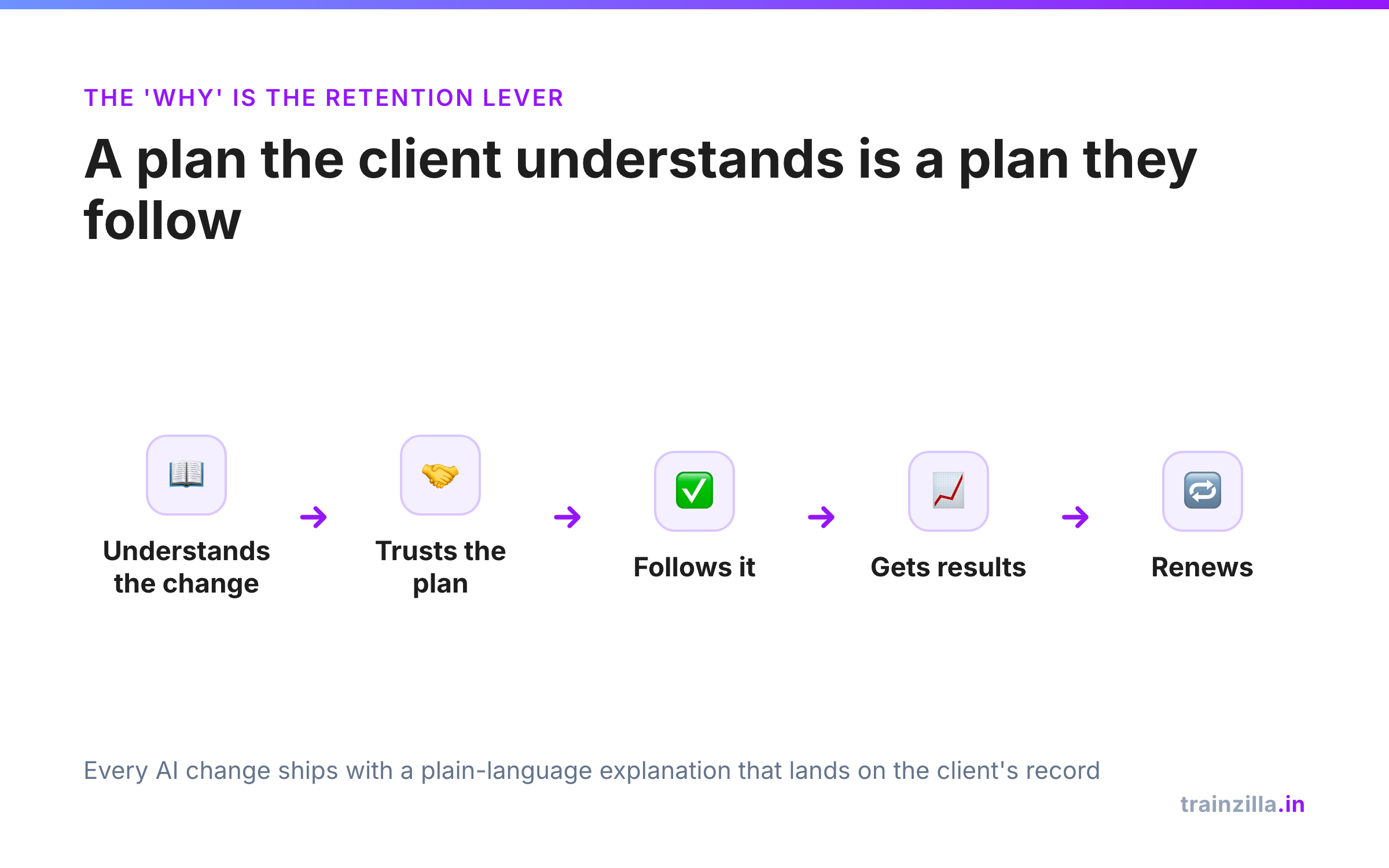
What AI coaching actually feels like for the client — and why that changes retention
"AI coaching" usually means the coach's workflow. But the client feels it too — in how fast their plan responds, and whether they understand why it changed. That second part is most of retention.

Managing Client Expectations Through the Holidays
Holidays and celebrations don't have to derail client progress. A pre / during / post framework that keeps people on track without asking them to sit out.
Keeping Clients Training Through Bad-Weather Seasons
When rain, heat, or cold pushes training indoors for weeks, the right indoor programming and motivation tactics keep clients engaged and retention high.