How to Sell Workout Plans Online as a Personal Trainer
How to sell workout plans online: pick a niche, package plans you already write, price them, take payments and list them where clients can find you.
To sell workout plans online, package a plan you have already written for a specific type of client, price it as a product, put it somewhere people can pay in a few taps, and point your existing audience at it. The hard part is packaging, not programming: most coaches already have the plans. Trainzilla's plan templates and marketplace are built for exactly this step.
What kinds of fitness plans can you sell?
- A fixed-length programme such as an eight-week beginner strength plan.
- A reusable plan template that a buyer adapts to their own week.
- A diet or meal-plan template with ingredient-level macros.
- A bundle of training, nutrition and daily habits.
Step 1: Pick a narrow audience
"Workout plan" is a category. "Twelve-week strength plan for desk workers training at home" is a product. A narrow promise is easier to write, easier to explain and easier to find. Start with the kind of client you already get results with.
Step 2: Turn a plan you already wrote into a product
If you have coached a dozen people through the same block, you already have the product. In Trainzilla you save a finished plan as a template, so you build it once and reuse it many times, starting from a proven split instead of a blank page. Templates are also how you scale coaching, not just selling. See the workout plan builder and diet plan builder.
Step 3: Price it as a product
Price by outcome and length, not by number of exercises. Keep one low-priced entry plan for people who do not know you yet, and test a price for a full month before changing it. Changing it weekly tells you nothing.
Step 4: Make paying easy
Every extra step loses buyers. Trainzilla supports UPI and card payments through Razorpay, plus Google Play and Apple in-app purchases inside the mobile apps. Details are in the payments and billing guide.
Step 5: Give buyers somewhere to land
A buyer who finds your plan will look you up before paying. A public coach page with your bio, specialties and certifications, real client transformations and testimonials, and a verified badge answers that question for you. Only show results and testimonials you actually have.
| Model | Effort per buyer | Income shape | Best for |
|---|---|---|---|
| One-off plan | Low once written | Per sale | Building an audience |
| Template bundle | Low, repeatable | Per sale | Coaches with a proven method |
| Monthly coaching | High and ongoing | Recurring | Deep, high-touch results |
| Plans first, coaching upsell | Medium | Mixed | Most independent coaches |
Selling plans versus selling coaching
Common mistakes when selling workout plans
- Aiming at everyone, so the plan speaks to no one.
- No next step after purchase, so buyers finish and vanish.
- Selling a list of exercises with no guidance on progression.
- Relying on one channel. Pair a marketplace listing with your own social content; see digital marketing for fitness professionals.
Frequently asked questions
Can I sell workout plans without my own website?
Yes. A marketplace listing and a public coach page give buyers somewhere to find and pay you without you building a site.
How much should I charge for a workout plan?
Price by the result and length of the plan, and stay well below what one month of one-to-one coaching costs. Test one price for a month before adjusting.
Do I need a certification to sell plans?
Requirements differ by country, so check your local rules. Buyers do look for credentials, and a coach profile can show yours.
What is the difference between selling plans and selling coaching?
A plan is a finished product bought once. Coaching is an ongoing service with check-ins and adjustments. Many coaches sell plans to reach new people, then offer coaching to those who want more.
Get the weekly coaching playbook
Keyword research, product tips and growth tactics for coaches — one email a week. No spam.
Sneha Joshi
Digital Marketing Specialist & Fitness Industry Expert with 7 years helping trainers grow their online presence.
See how the AI coach actually works
Watch the agent build and adjust a client plan every week — with the coach approving every change.
Related Articles

Digital Marketing for Fitness Professionals
Use messaging apps, short-form video, and local search to attract more clients and build a recognisable coaching brand online.
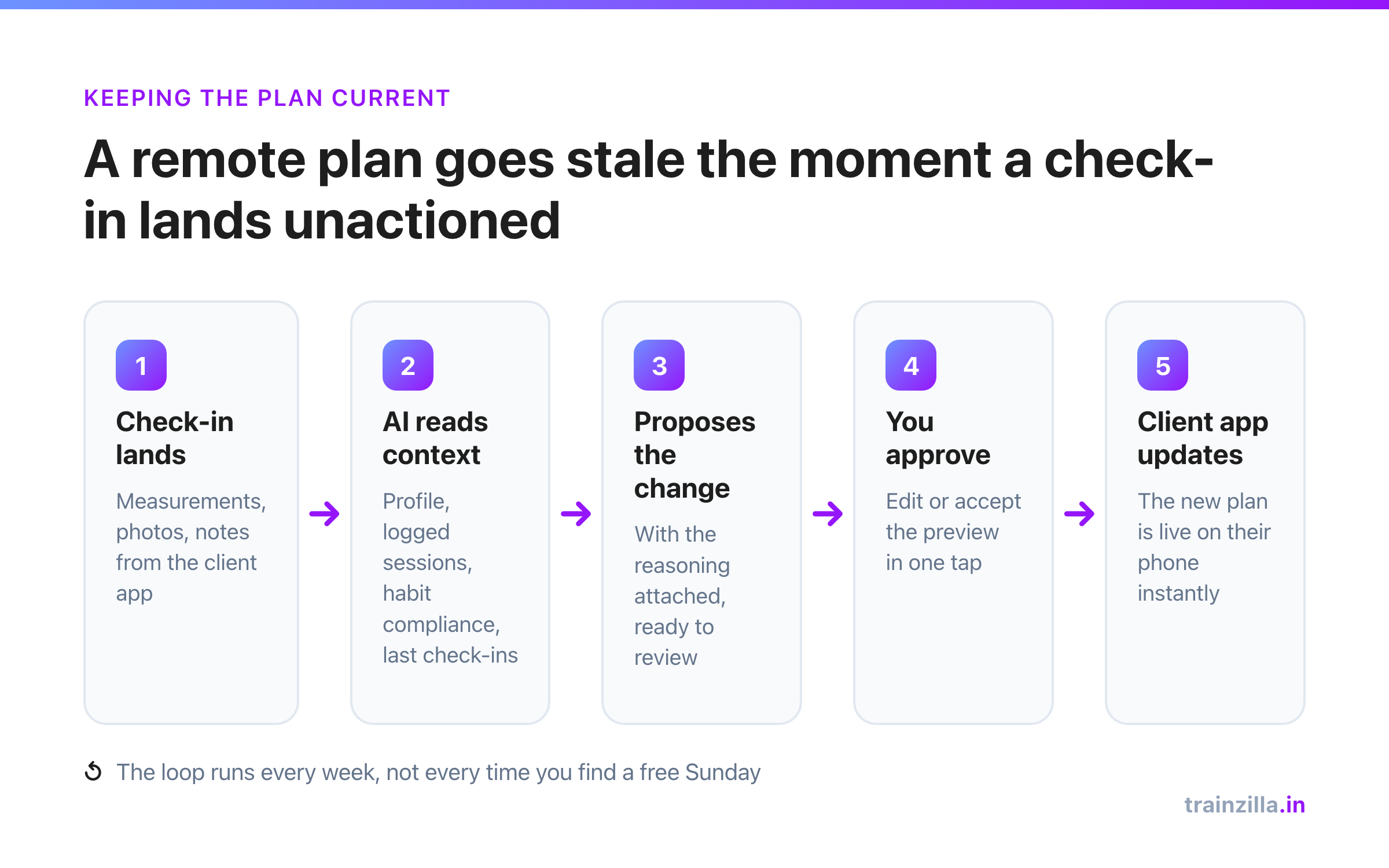
Software for online fitness coaches: what changes when your business runs remote
No gym floor, no face-to-face read on a client's week. Everything you know about them comes through a screen — so the software you run it on isn't a nice-to-have, it's the practice. Here's how Trainzilla is built for that.
Digital Payments: A Complete Guide for Coaches
Everything you need to accept digital payments, stay on top of tax compliance, and use payment data to grow your coaching income.